
Mastering Signage and Wayfinding Design: English Edition
Unlocking the Secrets of Signage and Wayfinding Design: A Comprehensive Guide
Ever walked into a mall or a hospital and felt like you were in a maze? That's where signage and wayfinding design come into play. But what exactly is it, and why is it so crucial? Let's dive into the world of signage and wayfinding design, and find out how it can make your life easier, one sign at a time.
What is Signage and Wayfinding Design?
Signage is like the "hello" of the visual communication world. It's those little signs you see everywhere, from "Exit" to "Bathroom." Wayfinding, on the other hand, is the art of guiding people through a space. It's like a GPS for your physical environment, ensuring that you can find your way without breaking a sweat.
Why is it Important?
Think about it, have you ever been to a place where you couldn't find the bathroom or the exit? It's frustrating, right? That's where good signage and wayfinding design come in. They make sure that people can navigate through a space easily, efficiently, and safely.
Key Elements of Effective Signage and Wayfinding Design
Now, let's break down the key elements that make up effective signage and wayfinding design:
Clarity: Signs should be clear and easy to read. No one wants to squint at a sign or try to decipher a cryptic message.
Consistency: Signs should be consistent in style, color, and font. This helps people recognize them as part of the same system.
Visibility: Signs should be placed in high-visibility areas, like at the entrance or at intersections.
Legibility: Signs should be large enough to be read from a distance, and the font should be easy to read.
Relevance: Signs should be relevant to the space they are in. For example, a sign in a hospital should be clear and informative, not just a list of rules.
Types of Signage
There are different types of signage, each serving a specific purpose:
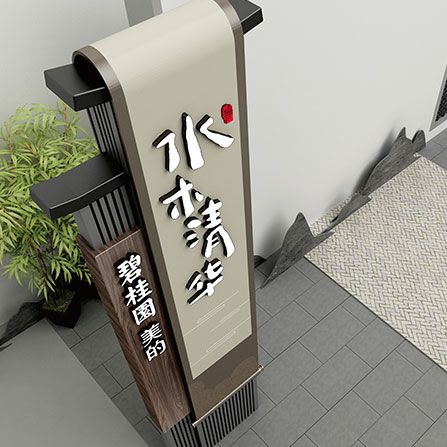
Directional Signs: These guide people to specific locations, like "Toilets" or "Emergency Exit." Think of them as the GPS for your physical space.

圖片由人和時代CRT標(biāo)識設(shè)計集團提供Informational Signs: These provide information about the space, like "No Smoking" or "Quiet Zone." They're like the informative brochures of the signage world.
Decorative Signs: These are for aesthetic purposes, like a logo or a company name. They're like the cherry on top of a delicious sundae.
Creating an Effective Wayfinding System
Creating an effective wayfinding system is like putting together a puzzle. Here are some steps to help you out:
Understand the Space: Before you start designing, you need to understand the space you're working with. What are the key areas? How do people move through the space?
Identify Key Areas: Determine the key areas that need to be identified, like restrooms, exits, and important departments.
Choose the Right Signs: Based on the key areas, choose the right type of signage. Remember, consistency is key.
Design the Signs: Design the signs with clarity, visibility, and legibility in mind. Use high-contrast colors and easy-to-read fonts.
Install the Signs: Make sure the signs are installed in the right places. They should be visible and easy to read from a distance.
Maintain the Signs: Keep the signs clean and up-to-date. A sign that's faded or outdated is like a dead end in the wayfinding world.
Case Studies: Successful Signage and Wayfinding Design
Let's take a look at some real-world examples of successful signage and wayfinding design:
New York City Subway: The NYC subway system is a maze, but their signage is top-notch. Clear, consistent, and easy to read, it helps millions of people navigate the system every day.
Apple Stores: Apple's stores are known for their minimalist design, and their signage is no exception. Simple, elegant, and informative, it guides customers through the store with ease.
John F. Kennedy International Airport: JFK Airport has a complex layout, but their wayfinding system is a breeze to use. Clear signs, helpful maps, and friendly staff make it easy for travelers to find their way.
Common Mistakes to Avoid
While designing signage and wayfinding systems, there are some common mistakes to avoid:
Overcomplicating: Don't make the signs too complex. Keep it simple and easy to understand.
Ignoring the Audience: Consider who will be using the signage and tailor it to their needs.
Not Testing: Before installing the signs, test them to make sure they're effective. Get feedback from real people and make adjustments as needed.
Conclusion
Signage and wayfinding design might seem like a small detail, but it can make a big difference in people's lives. By following these guidelines and avoiding common mistakes, you can create a signage and wayfinding system that's both effective and user-friendly. So, the next time you're designing a space, remember: a good sign can be a lifesaver!
And that's a wrap! If you have any questions or need further guidance on signage and wayfinding design, feel free to drop a comment below. Happy designing!

人和時代設(shè)計
品牌設(shè)計、VI設(shè)計、標(biāo)識設(shè)計公司


新聞資訊
News
酒店新聞
Hotel news
Mastering Signage and Wayfinding Design: English Edition2025/05/25
現(xiàn)代工廠標(biāo)識系統(tǒng)設(shè)計 視覺識別與品牌形象塑造2025/05/25
前沿設(shè)計招聘 最新標(biāo)識設(shè)計師職位火熱開啟2025/05/25
海洋館標(biāo)識設(shè)計 融合海洋元素的藝術(shù)詮釋2025/05/25
標(biāo)識設(shè)計官網(wǎng) 專業(yè)品牌形象塑造平臺2025/05/25
權(quán)威指南 標(biāo)識設(shè)計之道2025/05/25
創(chuàng)意班級標(biāo)識 打造獨特校園文化名片設(shè)計指南2025/05/25
幼兒園班牌標(biāo)識創(chuàng)意設(shè)計精選圖庫2025/05/25
標(biāo)識導(dǎo)視設(shè)計費用解析 全面預(yù)算指南2025/05/25